Back to home
INTERNATIONAL29 June 2026
The Fractured Resilience of Venezuela After the Earthquakes
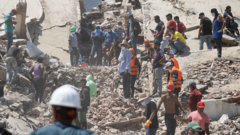
Twin earthquakes struck northern Venezuela on June 29, 2026, leaving communities to dig through rubble with crowbars, pickaxes and bare hands as state rescue services were overwhelmed. The scene highlights the deepening humanitarian crisis amid the nation’s prolonged economic collapse.
La
La Rédaction
The Vertex
5 min read
Source: www.bbc.co.uk
On the morning of June 29, 2026, the twin earthquakes that struck northern Venezuela sent shockwaves through communities already bruised by years of economic collapse. In the hardest‑hit towns, residents wielded crowbars, pickaxes and even their bare hands, digging frantically through piles of concrete and twisted metal in a desperate bid to reach survivors trapped beneath the rubble.
These improvised rescue efforts expose a stark reality: the state’s capacity to respond is overwhelmed, leaving citizens to assume the role of first responders. The absence of organized emergency services, combined with damaged roads and limited communication, forces families to navigate a labyrinth of danger without professional guidance. The reliance on manual tools underscores both the urgency of the situation and the profound vulnerability of a population accustomed to scarcity.
Venezuela’s current crisis is not an isolated incident but part of a broader pattern of institutional decay that began with the 2015 oil price collapse and deepened through hyperinflation and political polarization. Past disasters, such as the 2010 earthquake in Port‑au‑Prince and the 2021 landslides in the Andes, revealed similar gaps between official preparedness and on‑the‑ground reality. The twin tremors have intensified an already fragile social fabric, as displaced families confront food insecurity, limited medical care, and the specter of disease outbreaks in makeshift camps.
Looking ahead, the path to recovery will hinge on coordinated international assistance, transparent governance, and the rebuilding of resilient infrastructure. Without a concerted effort to restore basic services and protect vulnerable communities, the aftershocks of this disaster may linger far beyond the physical tremors, shaping the nation’s trajectory for years to come.