Back to home
INTERNATIONAL3 July 2026
The Deadly Convergence: Overcrowded Transport and Mountain Hazards in Pakistan
At least 32 people died when an overloaded bus crashed into a ravine in the Dana Sar mountains on 3 July 2026, highlighting ongoing road safety failures in Pakistan.
La
La Rédaction
The Vertex
5 min read
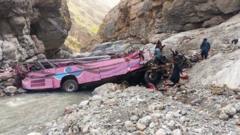
Source: www.bbc.co.uk
At least 32 people have died after a heavily overloaded bus plunged into a ravine in the Dana Sar mountain range, near the route linking Quetta to Peshawar. The accident, which occurred on 3 July 2026, underscores the lethal combination of poor road safety and treacherous terrain that characterises many remote highways in Pakistan.
The vehicle, reportedly carrying far more passengers than its design capacity, lost control on a sharp bend and fell several hundred metres down a steep slope. Rescue teams arrived after a prolonged search, but the dense fog and rugged landscape hampered recovery operations. The death toll, which may yet rise, reflects a recurring pattern of fatal bus accidents across the country, often linked to lax enforcement of passenger limits and inadequate vehicle maintenance.
Beyond the immediate human cost, the incident reveals deeper systemic failures. Pakistan’s transport sector has expanded rapidly in recent decades, yet infrastructure investment has lagged, leaving many mountain passes vulnerable to landslides and poorly marked roads. Corruption and political patronage further erode safety standards, as local authorities frequently prioritize political considerations over rigorous oversight. The loss of transport links also disrupts supply chains, affecting markets in the provinces of Balochistan and Khyber Pakhtunkhwa, and exacerbates regional inequalities.
The tragedy calls for a comprehensive review of transport policy, including stricter licensing, regular vehicle inspections, and investment in safer routing alternatives. Without decisive action, the cycle of preventable deaths will continue, jeopardising not only lives but also the economic vitality of regions dependent on precarious cross‑country links.