Back to home
INTERNATIONAL3 July 2026
First Ebola Treatment Trial Launches in DRC, Offering Hope Amid Ongoing Crisis
An experimental monoclonal antibody therapy is being administered to 20 Ebola patients in the Democratic Republic of Congo for the first time, as WHO reports 1,406 confirmed cases and 438 deaths. The trial aims to assess safety and efficacy while highlighting the need for sustained investment in epidemic preparedness.
La
La Rédaction
The Vertex
5 min read
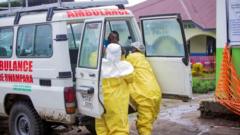
Source: www.bbc.co.uk
An experimental therapy for Ebola is being administered for the first time in the Democratic Republic of Congo, marking a decisive step in the fight against a disease that has claimed nearly half a thousand lives, and offering a glimpse of hope amid a prolonged health crisis.
The trial, coordinated by the World Health Organization and local health authorities, enrolls 20 patients who will receive a monoclonal antibody cocktail developed by a consortium of pharmaceutical firms. Participants are randomly assigned to receive either the experimental treatment or standard supportive care, and an independent data monitoring board will review adverse events on a weekly basis. Early-phase data suggest the treatment may reduce viral load and improve survival rates, but safety monitoring remains paramount in a setting where health facilities are strained and community mistrust can impede data collection.
Since the 2014 West Africa epidemic, global attention to Ebola has intensified, yet the DRC has endured multiple flare‑ups, recording 1,406 confirmed cases, 301 suspected cases and 438 deaths according to WHO figures released on 2 July 2026. The persistence of the virus in a region plagued by political instability and armed conflict underscores the need for adaptable response strategies that go beyond medical interventions, including enhanced contact tracing, safe burial practices, and cross‑border surveillance.
Success in this trial could accelerate regulatory approval pathways and provide a template for combating future hemorrhagic fevers, but it also highlights the chronic under‑investment in epidemic preparedness. Sustained financing, robust surveillance, and community engagement will be essential if the DRC is to turn this experimental breakthrough into a lasting tool against Ebola, and ultimately strengthen regional health security.