Back to home
INTERNATIONAL28 June 2026
Israel’s Southern Lebanon Strike Tests the Fragility of a New Maritime Framework
An Israeli air strike in southern Lebanon killed at least one civilian a day after the country and Israel signed a maritime framework agreement, raising concerns about the durability of the de‑escalation.
La
La Rédaction
The Vertex
5 min read
Source: www.bbc.co.uk
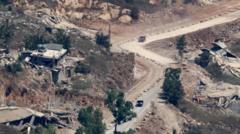
The Israeli air force carried out a strike in southern Lebanon on June 27, 2026, killing at least one civilian, according to Lebanese state media. The attack occurred a day after Lebanese authorities and Israel formally signed a framework agreement aimed at defining maritime boundaries and reducing cross‑border tension. The jets targeted a site near Marjeyoun, a village long contested between Hezbollah and Israeli forces. The limited casualty count highlights the fragile nature of the recent de‑escalation.
Politically, the strike signals Hezbollah’s refusal to accept the framework as a genuine de‑escalation. The group denounced it as a violation of the 2020 ceasefire, arguing that it leaves armed capabilities unchecked. This rhetoric may embolden hard‑line factions within Lebanon’s fragmented coalition, complicating President Michel Aoun’s attempts to restore state authority. Moreover, the timing raises the risk of a reciprocal Israeli response, potentially reigniting broader hostilities along the border.
The framework agreement, brokered with United Nations participation, represents the first formal step toward settling the maritime dispute that has persisted since the 2006 war. While it promises potential gas exploration and economic benefits for Lebanon, its implementation is hampered by mistrust, the presence of armed groups operating outside state control, and competing regional interests. The strike underscores how fragile the diplomatic process remains when on‑the‑ground realities continue to fuel confrontation.
Looking ahead, durable peace will depend on more than the signing of accords. Effective monitoring of ceasefire violations and the integration of non‑state actors into Lebanon’s security apparatus are essential. Without such mechanisms, the region risks a cycle of intermittent strikes that could further destabilise Lebanon’s economy and the wider Levantine security architecture.