Back to home
INTERNATIONAL27 June 2026
Tectonic Tragedy: The Human Cost of Venezuela's Earthquake Crisis
A series of powerful earthquakes in northern Venezuela on June 27, 2026, killed 920 people and left hundreds trapped, prompting an international rescue response amid the country's ongoing humanitarian crisis.
La
La Rédaction
The Vertex
5 min read
Source: www.bbc.co.uk
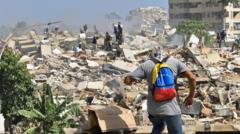
On the morning of June 27, 2026, a series of powerful tremors struck northern Venezuela, leaving 920 confirmed dead and hundreds more feared trapped beneath collapsed structures. The disaster unfolded in the early hours, catching residents unaware and prompting an immediate scramble for survivors.
International rescue teams, including personnel from neighboring Colombia and the United Nations Disaster Assessment and Coordination Centre, have begun arriving in the affected zones. Their deployment underscores the scale of the emergency, as families cling to hope while the death toll continues to rise. The United Nations has called for coordinated humanitarian corridors to facilitate the delivery of medical supplies and food to isolated communities.
The earthquake exacerbates Venezuela's protracted crisis, where economic collapse, hyperinflation, and chronic shortages have already strained the nation's capacity to respond to natural disasters. Infrastructure, long compromised by neglect and conflict, crumbled under the seismic force, revealing the vulnerability of densely populated urban centers that lack modern seismic safeguards.
The seismic event also reverberates beyond the immediate humanitarian toll, influencing regional diplomatic dynamics. Neighboring countries, wary of spillover effects, have pledged additional logistical support, while the Venezuelan government faces pressure to demonstrate competence in crisis management amid an ongoing political stalemate. Historically, Venezuela has experienced moderate seismic activity, but the 2026 quakes rank among the deadliest in recent decades, exposing the inadequacy of building codes that have not been revised since the early 2000s.
Looking ahead, the tragedy may catalyze renewed calls for resilient construction standards and a more robust international aid framework. However, the political volatility that has hampered previous relief efforts suggests that sustainable recovery will depend not only on technical solutions but also on stabilising governance and fostering trust between the state and its citizens.