Back to home
INTERNATIONAL26 June 2026
UN Halts Strait of Hormuz Evacuation Amid Mystery Attack on Cargo Vessel
The United Nations paused its planned evacuation of foreign nationals from the Strait of Hormuz after a cargo vessel was struck by an unknown projectile near Oman, with no casualties reported. The incident raises questions about maritime security and the risk of miscalculation in a tense geopolitical environment.
La
La Rédaction
The Vertex
5 min read
Source: www.bbc.co.uk
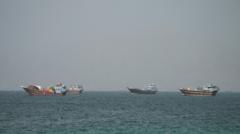
On 26 June 2026, the United Nations announced a temporary suspension of its planned evacuation of foreign nationals from the Strait of Hormuz after a cargo vessel was struck by an unidentified projectile near Oman. No casualties were reported, but the attack introduced new uncertainty into a waterway already marked by geopolitical tension.
The evacuation scheme, launched earlier this year to provide a rapid exit for diplomats and aid workers should conflict flare, was halted pending clarification of the incident. An “unknown projectile” could be a low‑tech missile, a drone‑borne explosive, or a misfired naval round, each suggesting distinct actors and motives. The lack of casualties eases immediate humanitarian worries, yet it heightens the risk that misinterpretation could trigger broader confrontation.
The Strait of Hormuz handles roughly one‑third of global oil shipments, making any disruption economically significant. Since the early 2020s, the region has seen a rise in maritime incidents—from alleged mine attacks on tankers to drone strikes on ports—often linked to proxy rivalries between Iran and its neighbours. The UN’s previous evacuation plan recalled the 2019 “Operation Guardian,” a response to heightened Iran‑US tension, illustrating how diplomatic and limited military postures coexist and can inadvertently raise escalation risks.
The UN’s pause may prompt renewed diplomatic overtures, such as joint maritime monitoring or a UN‑run hotline, to prevent miscalculation. However, if the projectile’s origin remains unclear, the incident could embolden actors seeking to exploit maritime ambiguity, potentially leading to a stronger naval presence and tighter regional alliances. Ultimately, the episode highlights the fragility of crisis management in a globally interconnected shipping environment.