Back to home
INTERNATIONAL26 June 2026
Remembering the Fallen: Families, Barbed Wire, and the Lingering Echoes of Kenya's 2024 Protests
On the anniversary of the 2024 Kenyan protests, families laid flowers at a barbed‑wire barricade, demanding justice for the dozens killed and highlighting the ongoing tension between state repression and calls for accountability.
La
La Rédaction
The Vertex
5 min read
Source: www.bbc.co.uk
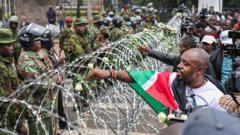
On the morning of June 25, 2026, families gathered at the site where a barbed‑wire barricade once choked the streets of Nairobi, laying bouquets of white lilies and orange marigolds. The makeshift memorial marked the second anniversary of the deadly protests that erupted in 2024, when security forces opened fire on demonstrators demanding accountability for the dozens killed.
While the state has announced a commission of inquiry and promised reparations, the persistence of the barbed‑wire fence—originally erected to prevent further gatherings—highlights the paradox of a government seeking stability through repression. Families, many of whom lost parents or siblings, continue to press for transparent investigations, emphasizing that justice cannot be reduced to symbolic gestures. The demand underscores a broader tension between Kenya’s aspirations for democratic governance and the entrenched security apparatus that has historically curbed dissent.
The 2024 demonstrations were part of a wave of youth‑led uprisings across East Africa, sparked by unemployment, corruption, and a perceived erosion of civil liberties. Similar protests have unfolded in Sudan, Ethiopia, and Uganda, reflecting a continent‑wide reckoning with authoritarian legacies. Kenya’s experience, therefore, is not an isolated incident but a symptom of a regional fatigue with leaders who prioritize political control over inclusive development.
Looking ahead, the anniversary may catalyze legislative reforms, such as stricter oversight of police conduct and greater community policing models, yet the entrenched interests that benefit from the status quo could resist change. The durability of the memorial itself suggests that, as long as the wounds remain unhealed, Kenya’s path toward reconciliation will be measured not by official statements, but by the willingness of its citizens to confront the past without fear.